

Quality
Quality and evidence
This page names the standards we supply to and the inspections we commission. It does not describe a certification held by the company itself. We disclose which approval exists in a given case before the contract is concluded.

Management standards
How organisation, environment and occupational safety are governed
ISO 9001
Quality management
Governs how a company organises processes, responsibilities and improvement so that a delivery repeatably achieves the same quality as the previous one.
ISO 14001
Environmental management
Governs the handling of environmental impacts, resource use and waste, and compliance with environmental requirements along the supply chain.
ISO 45001
Occupational health and safety management
Governs how hazards at the workplace are identified and controlled, from loading through to the terminal.
Labelling
REACH and GHS/CLP
REACH
The EU chemicals regulation on the registration, evaluation, authorisation and restriction of chemicals. Anyone who imports a substance into the EU or places it on the market there must register it above a quantity threshold. This also applies to imported petrochemical goods and additives.
REACH governs the substance itself and not the individual delivery. In the shipping documents it shows up in practice as the safety data sheet and the labelling.
GHS/CLP
The Globally Harmonized System for the classification and labelling of chemicals sets pictograms, signal words and H and P statements on the label. CLP is the legally binding implementation of GHS in the EU.
Labelling and safety data sheet belong together: the label shows the short form of the hazard, the data sheet the complete handling instructions.
16 sections, fixed order
The safety data sheet
Safety data sheet or SDS is the current term under GHS. MSDS is the older name for the same document and still appears in older paperwork. Both refer to the same format with 16 sections.
- Identification of the substance or mixture and of the company
- Hazards identification
- Composition and information on ingredients
- First-aid measures
- Firefighting measures
- Accidental release measures
- Handling and storage
- Exposure controls and personal protection
- Physical and chemical properties
- Stability and reactivity
- Toxicological information
- Ecological information
- Disposal considerations
- Transport information
- Regulatory information
- Other information
The sections always appear in this order, so a warehouse worker or a firefighter in an emergency finds the same number in the same place, whichever plant issued the sheet.
Dangerous goods and approvals
Regulations for the transport route and engine oil licence
| Rule set | Scope | Meaning |
|---|---|---|
| IMDG | Sea transport | International Maritime Dangerous Goods Code. Sets out how dangerous goods are packed, marked, documented and loaded for sea transport. The UN number and packing group determine the requirement. |
| ADR | Road transport | European Agreement concerning the International Carriage of Dangerous Goods by Road. Governs the vehicle, marking and accompanying papers for the overland leg to or from the port. |
| API licence (EOLCS) | Engine oils | The Engine Oil Licensing and Certification System of the American Petroleum Institute. A plant has its formulation tested in the laboratory against an API category such as SP or CK-4 and receives the right to use the API mark. The licence number can be looked up directly with the API. |
A certificate of analysis is only as reliable as the company that signs it, and only as current as the batch it describes.
Independent inspection
Inspection companies and verifiability
Why the number matters
Verifiable directly with the inspector
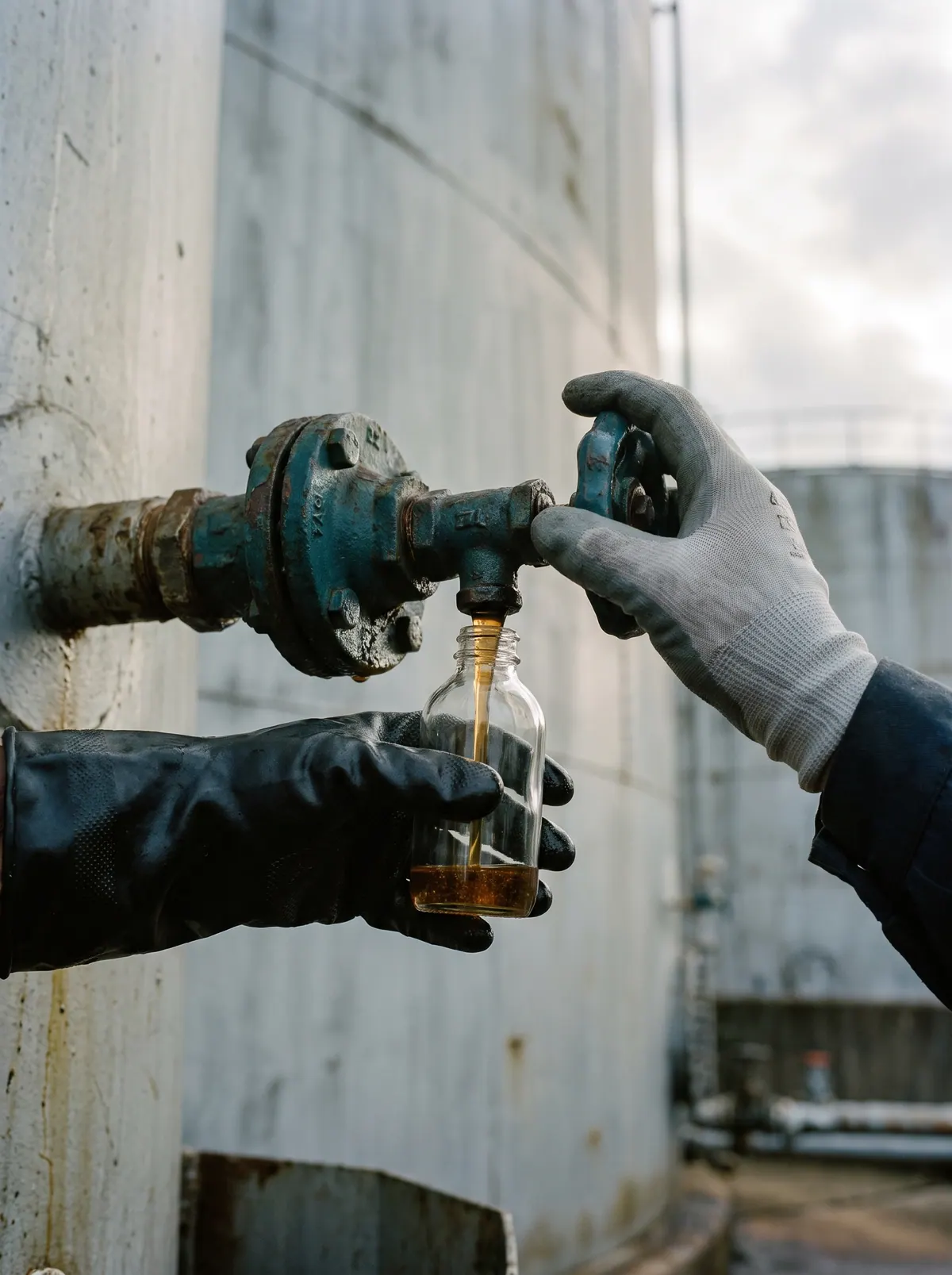
Forged inspection reports with invented certificate numbers are a common type of fraud in this market. The number on a certificate of analysis or quantity can be verified directly with the issuing company, and should not be checked only with whoever sent the email.
Inspection company
SGS
Independent verification of quantity and quality before or during loading, commissioned on request. Certificate number directly verifiable with SGS.
Inspection company
Intertek
Independent verification of quantity and quality before or during loading, commissioned on request. Certificate number directly verifiable with Intertek.
Inspection company
Bureau Veritas
Independent verification of quantity and quality before or during loading, commissioned on request. Certificate number directly verifiable with Bureau Veritas.
Inspection company
Cotecna
Independent verification of quantity and quality before or during loading, commissioned on request. Certificate number directly verifiable with Cotecna.


What is binding
Typical value, batch analysis and contract
- 01Typical value (TDS)
The technical data sheet describes what a product usually delivers, based on manufacturing experience. It states an expectation and is no commitment for a particular batch.
- 02Batch analysis (COA)
The certificate of analysis gives laboratory results for the batch actually delivered, confirmed where required by an independent inspection company. It applies to that batch only.
- 03Contract specification
The contract fixes the tolerance within which the batch analysis may deviate from the typical value. A claim can only be based on the contract, never on the data sheet.
We name the standards we supply to and the inspection companies we appoint. Logos of other companies appear only after their written approval.
Request testing for an item
Give us the product, quantity, delivery term and destination port. We settle everything else by phone.